
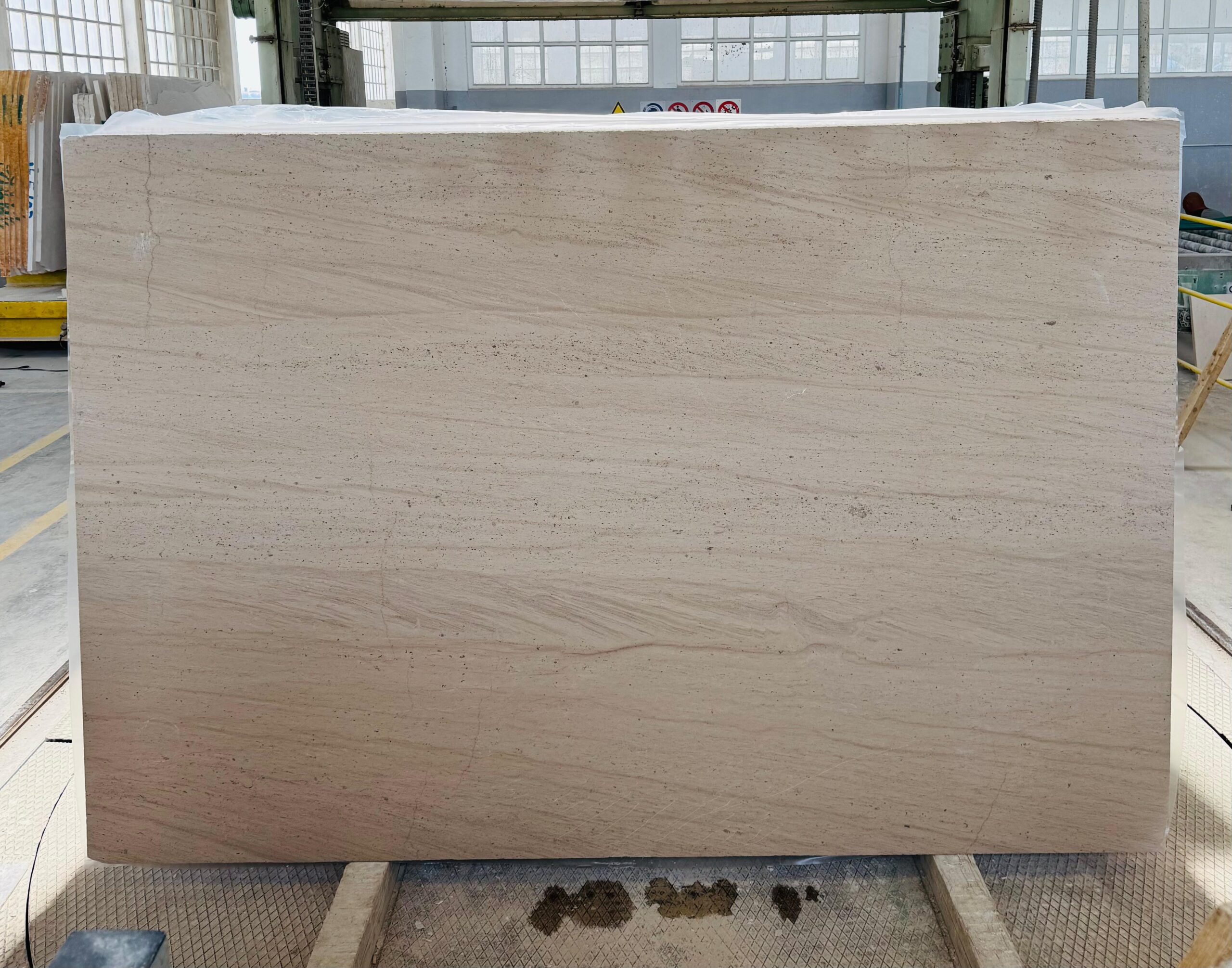
In the world of high-end architecture, few materials offer the perfect intersection of warmth, durability, and versatility like Moca Cream limestone. Quarried in the heart of Portugal, this beige natural stone has moved beyond a trend to become a foundational choice for contemporary and classical projects alike.
Whether you are designing a high-traffic commercial lobby or a luxury residential façade, understanding the nuances of Moca Cream is essential for delivering a project that stands the test of time.
What is Moca Cream Limestone?
Moca Cream (also known as Moca Creme) is a sedimentary rock from the Alcanede region of Portugal. It is globally recognized for its uniform beige background and distinctive parallel veining. Unlike more erratic marbles, Moca Cream offers a consistent aesthetic that allows architects to create seamless, large-scale surfaces.
The Two Faces of Moca Cream: Vein-Cut vs. Cross-Cut
The appearance of the stone changes dramatically depending on how it is processed at the quarry:
- Vein-Cut: The stone is cut against its natural layers, revealing long, parallel lines. This creates a modern, linear texture often used for vertical cladding to elongate structures.
- Cross-Cut: The stone is cut in favor of the grain, resulting in a cloud-like, uniform beige surface without visible lines. This is preferred for a minimalist, “clean” look.
5 Reasons Why Architects Choose Moca Cream for Projects
1. Thermal Performance and Energy Efficiency
In warmer climates (such as the Gulf region or Mediterranean), Moca Cream is a functional hero. Its light beige tone has a high Solar Reflectance Index (SRI), meaning it reflects a significant amount of heat rather than absorbing it. This helps reduce “heat island” effects on buildings and lowers interior cooling costs.
2. Unrivaled Aesthetic Consistency
One of the greatest challenges with natural stone is color variation. Moca Cream is famous for its uniformity. Architects can specify 10,000 square meters of this limestone and maintain a tight color range, ensuring that the finished façade looks cohesive rather than patchy.
3. Versatile Finishing Options
Moca Cream adapts to its environment through different surface treatments:
- Honed: A smooth, matte finish—the “gold standard” for exterior cladding.
- Polished: Enhances the depth of the veins, perfect for luxury interior flooring.
- Bush-Hammered: Creates a rough, non-slip texture ideal for pool surrounds and public walkways.
- Split-Face: Offers a rugged, rustic look for accent walls.
4. Technical Durability
Despite its “soft” appearance, Moca Cream is a hard limestone. With a compressive strength that ranges between 100.00 and 150.00 MPa and high frost resistance, it is suitable for both interior and exterior applications in diverse climates, from the heat of Dubai to the freeze-thaw cycles of Northern Europe.
5. Sustainability and Authenticity
As a natural material, Moca Cream has a lower carbon footprint than many synthetic cladding options. It is non-toxic, recyclable, and provides a sense of “permanence” that only natural stone can offer.
Key Applications in Modern Architecture
Exterior Ventilated Façades
Moca Cream is the ex-libris of Portuguese cladding. Its structural integrity makes it perfect for ventilated façade systems, where stone panels are mechanically fixed to a building’s frame. The linear “Vein-Cut” is particularly popular for creating rhythmic, textured building skins.
Luxury Interior Flooring
In residential projects, Moca Cream creates a “quiet luxury” atmosphere. Its neutral palette pairs perfectly with dark wood, glass, and blackened steel.
Architectural Features
From massive columns to carved fireplace surrounds, the stone’s fine-to-medium grain allows for intricate masonry work that doesn’t crumble under the chisel.
Technical Specifications at a Glance
Porosity: 6-8%
Density: 2480 Kg/m³
Water Absorption: 2-4%
Flexural Strength Under Load: 14.9 MPa
Maintenance Tips for Architects & Property Owners
To ensure Moca Cream retains its beauty, follow these best practices:
Neutral pH Cleaning: Use specialized stone soaps for regular maintenance.
Avoid Acids: Never use acidic cleaners (like vinegar or lemon-based products) as they will etch the calcite surface.
Final Thoughts: A Timeless Investment
Choosing Moca Cream is about more than just selecting a color; it’s about choosing a material with a proven global track record. Its ability to balance organic beauty with technical performance ensures it will remain a staple in the architect’s toolkit for decades to come.
FAQ:
While beautiful, Moca Cream is acid-sensitive. If used for countertops, it must be professionally sealed and treated with care. It is more commonly recommended for backsplashes or bathroom vanities.
This refers to the grain size. “Fine” has a tighter, smoother appearance, while “Medium” shows more of the stone’s natural fossilized elements.
No. Being a natural mineral, its color is UV-stable and will not fade like synthetic materials.
Leave a Reply